THE HOLDING ATLAS METHOD
The Holding Atlas Method is a structural approach to the body centered on the relationship between the atlas, the soft tissues that support the skeleton, and the spine as a whole.
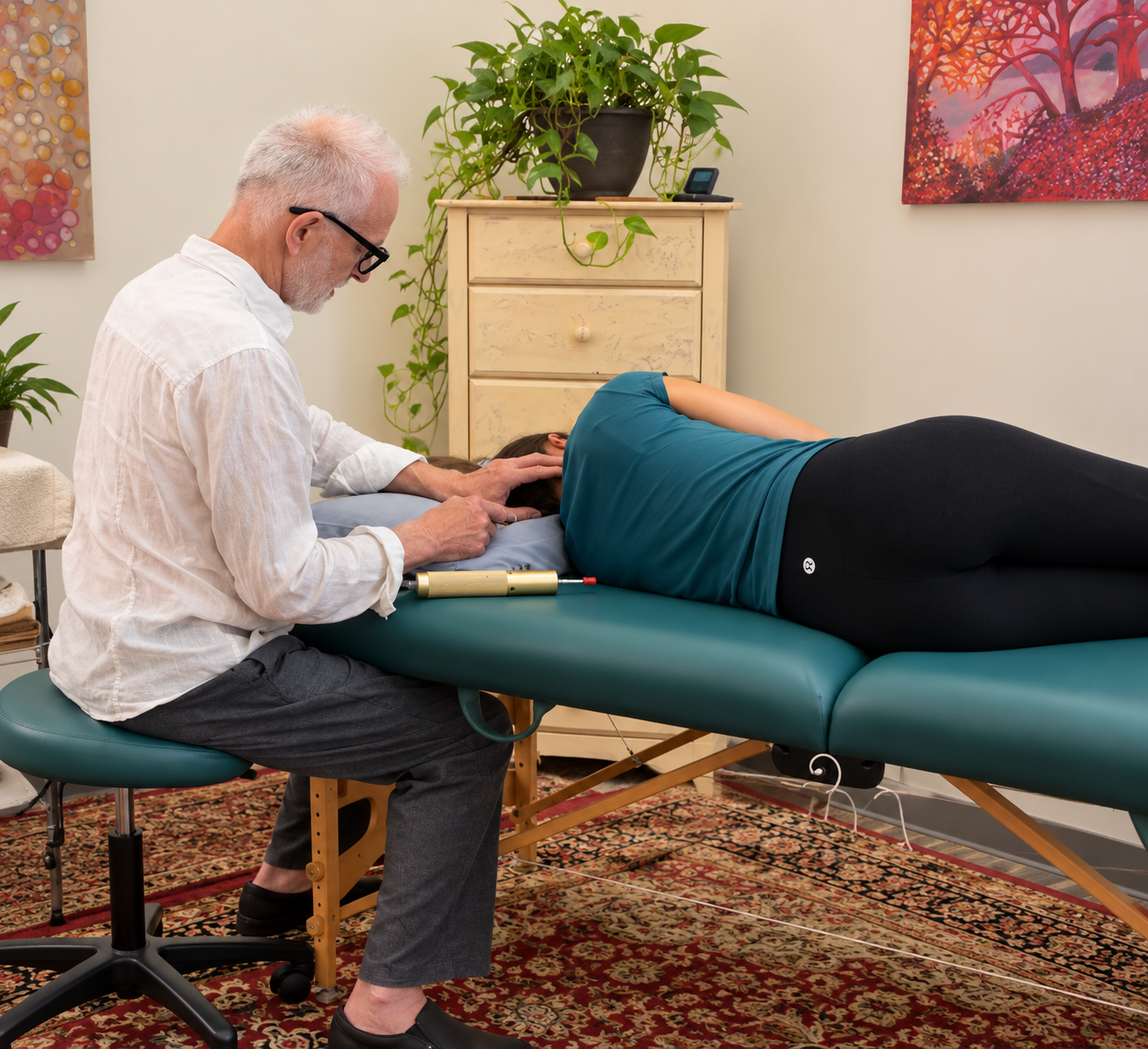
At the top of the spinal column, the atlas forms the structural connection between the head and the rest of the spine. I think of the spine much like a chain: when the relationship at the top is shifted or rotated, the structures below may adapt and compensate. For this reason, the atlas and the soft tissues surrounding it are a primary focus of my work.
THE BODY FROM THE SOFT TISSUE OUT
The skeleton does not function independently of the muscles, fascia and connective tissues that surround and move it. Patterns of tension and restriction in these tissues can influence how the skeleton is held and how freely the spine can move.
My work therefore begins with the soft tissue.
Rather than attempting to force the harder structural elements of the body into position, I identify patterns of restriction and work progressively to release and elongate the tissues involved. As those restrictions diminish, the body is given greater opportunity to reorganize naturally.
More than twenty years of Structural Integration practice—the bodywork tradition developed by Dr. Ida P. Rolf and widely known through Rolfing® Structural Integration—have trained my eye and hands to recognize these structural relationships throughout the body. Every session begins with the individual in front of me rather than with a predetermined protocol.
ATLAS • RELEASE • ELONGATION
Particular attention is given to establishing greater balance and freedom around the atlas. From there, I work progressively through the surrounding soft tissue and the rest of the spinal structure, encouraging release, length and greater ease of movement.
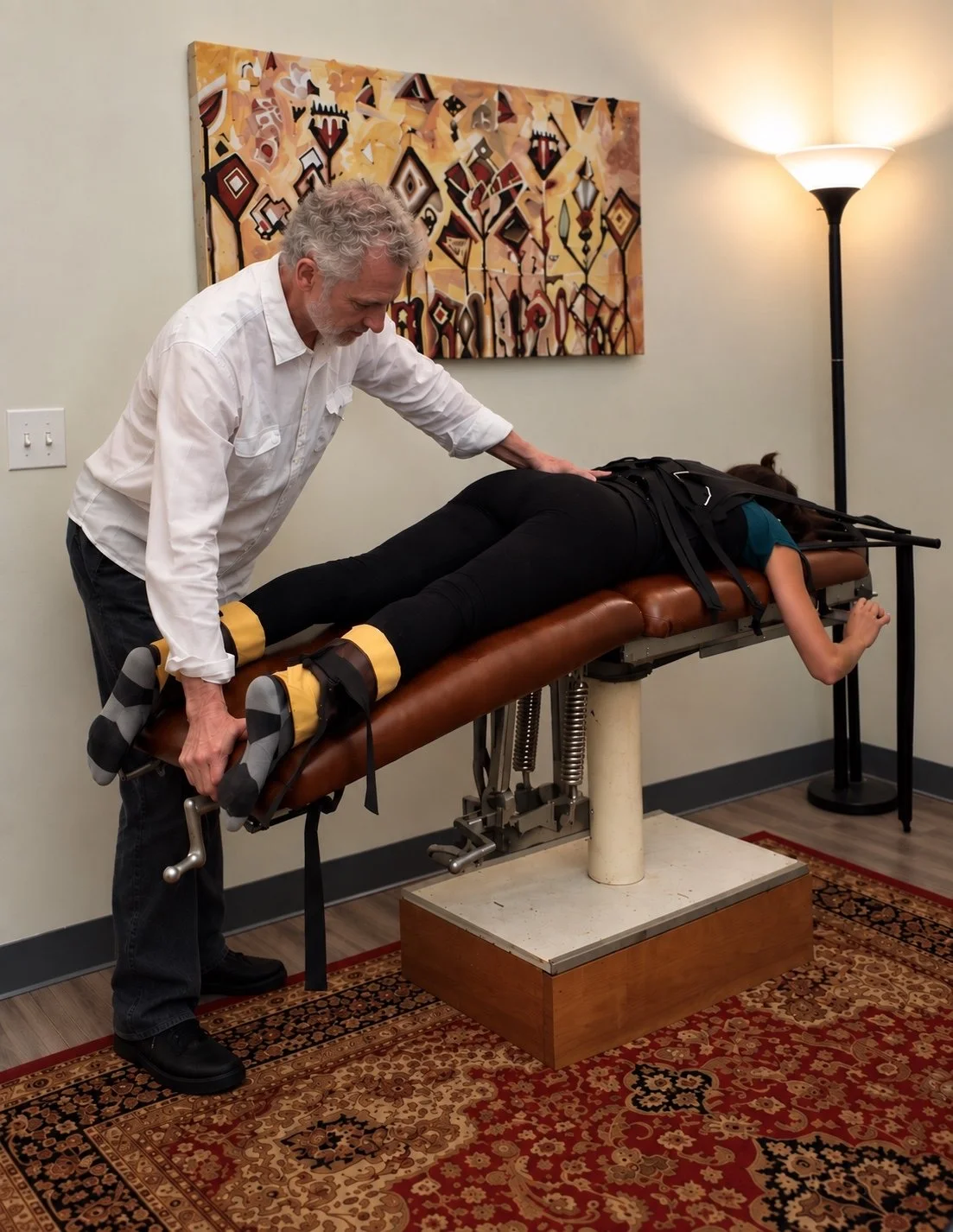
Only after the body has been prepared through hands-on soft-tissue work do I move to spinal decompression and elongation.
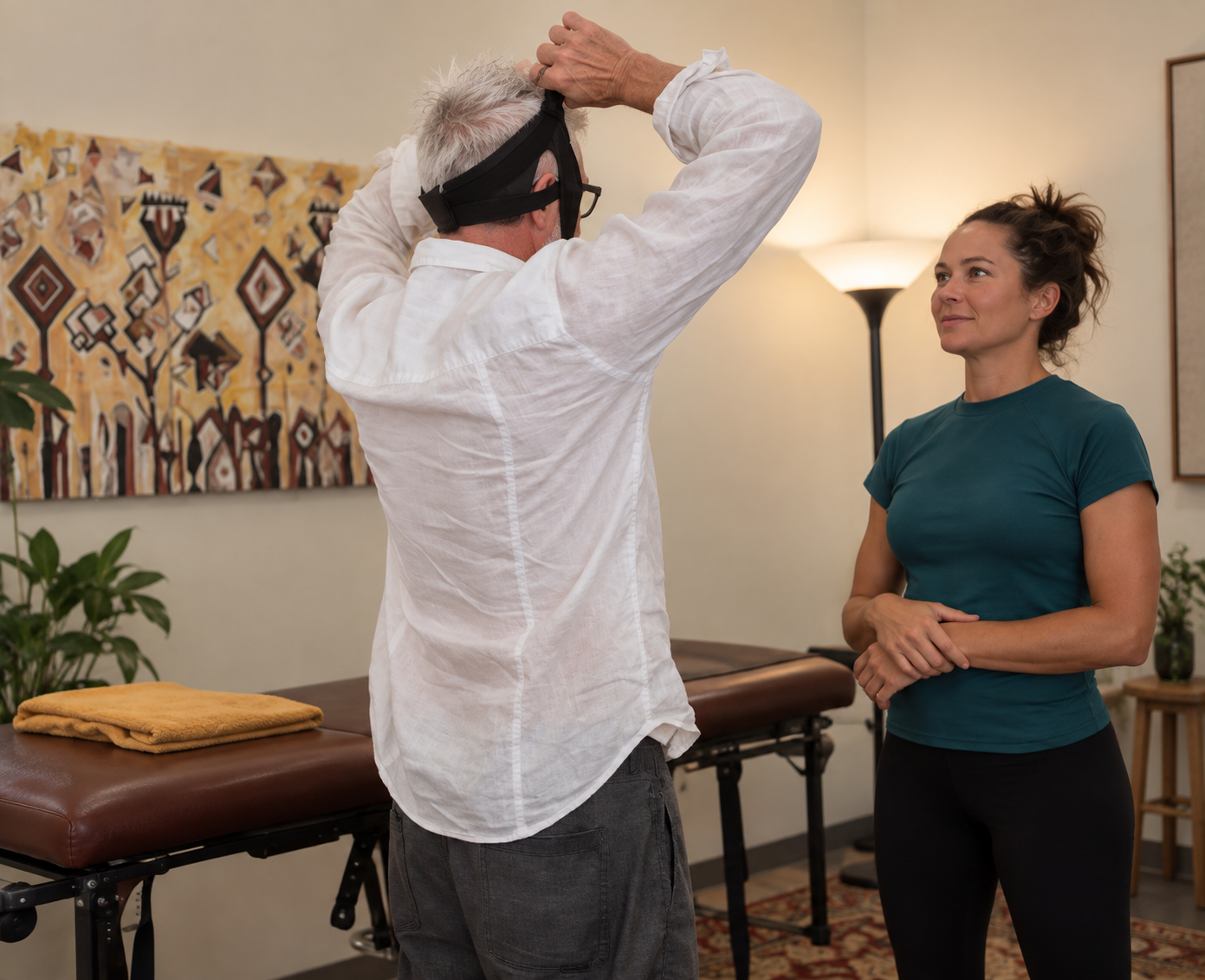
Using my specially configured McManis table and custom support harnesses for the feet, thoracic spine and cervical spine, controlled traction can then be introduced gradually and precisely. The objective is not simply to pull on the spine, but to create an environment in which already-prepared tissues can continue to release and the spine can lengthen with less resistance.
Spinal decompression is therefore not the starting point of the Holding Atlas Method. It is part of a larger structural process.
My aim is not simply to create a temporary change in position, but to address the patterns of soft-tissue restriction contributing to structural imbalance so that the body has the opportunity to maintain greater balance, length and freedom.